There's a moment in every painting where it stops being what you planned and starts being what it needs to be. It's not dramatic. It doesn't announce itself. You're working, and then you notice that the decisions you're making are no longer yours — or rather, they're yours, but they're being made in response to the painting rather than in service of your original idea.
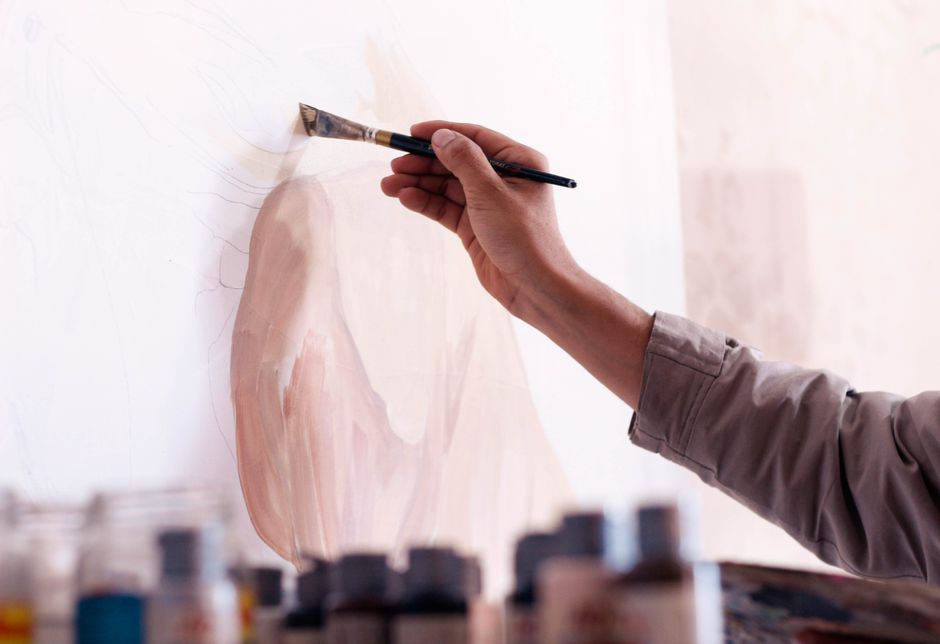
This is the moment most painters either fight or surrender to. Fighting it usually produces something technically correct and emotionally inert. Surrendering to it — following where the painting is going rather than where you intended to take it — is where the interesting work happens.
I've been thinking about this because I've been working on a series of large canvases that have all, at some point, stopped listening to me. Each one started with a clear intention. Each one became something else. The something else is, in every case, better than what I planned.
The painting practice I've developed over the years is partly about learning to recognize this moment earlier. In the beginning, I would fight it for days before giving in. Now I can usually feel it within a session — the shift in the quality of my attention, the way I start responding rather than directing.
What does it feel like? The best description I have is that the painting starts asking questions instead of accepting answers. You put down a color and it immediately suggests another. You make a mark and the space around it changes in a way that demands a response. You're no longer executing a plan. You're in a conversation.
The calitoymuse studio has been a place where I've been able to track this across multiple works simultaneously. Having several canvases in progress at once means I can see the moment of shift happening at different stages in different works. It's clarifying. The pattern is consistent even when the paintings are completely different.
There's a practical question here: how do you know when to follow the painting and when to hold your ground? My answer is imprecise but honest: follow it when the painting's suggestion is more interesting than your plan. Hold your ground when you're following out of laziness or fear rather than genuine response.

The lazy surrender is real. Sometimes you let the painting take over because you don't know what to do next, not because the painting is leading somewhere worth going. That's different from the genuine shift. The genuine shift has a quality of inevitability to it. The lazy surrender feels like relief. They're not the same.
I've been reading about this at creative community — the idea that the best creative work happens in the space between intention and response. The painting that stops listening to you is the painting that's started listening to itself. Your job at that point is to be a good enough listener to follow.
The art and place writers I admire talk about how a location can take over a piece of writing — how the place starts dictating what gets noticed, what gets said. Painting works the same way. The canvas is a place. At some point it starts telling you what it needs.
Learning to recognize that moment — and to trust it — is most of the work. The technical skills are necessary but not sufficient. The willingness to follow where the painting leads, even when it's not where you planned to go, is what separates the work that lives from the work that's merely correct.