January Sunflowers
I painted sunflowers in January. Not from life — there are no sunflowers in January, at least not here. From a photograph I'd taken in August, on a day when the light was doing something specific and I knew I'd want to return to it.
The painting was wrong from the start, and I mean that as a compliment.
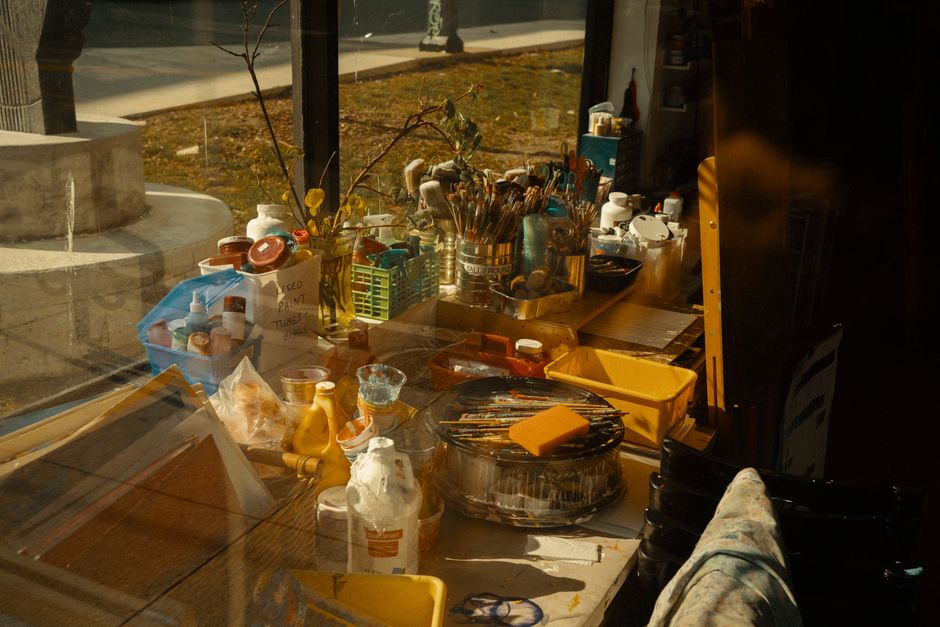
In August, I would have mixed those yellows warm — cadmium, a touch of orange, the heat of the season baked into the pigment. In January, with the grey light coming through the studio window and my hands slightly cold, I mixed them cool. Lemon yellow. A little green. The sunflowers in the painting are technically incorrect and emotionally true to the day I made them.
What Season Does to Color Perception
This is something painting teachers don't always explain clearly: your perception of color is not objective. It's calibrated to your environment. In summer, your eye adjusts to warm ambient light and you see shadows as cooler, more violet. In winter, the reverse. The same object, painted in different seasons, will look different not because you're painting it differently but because you're seeing it differently.
Most painters try to compensate for this. They use color charts, they check their mixes against reference photos, they try to be accurate. I've started doing the opposite. I let the season into the painting. The winter version of the summer subject becomes its own thing — a record of the gap between the subject and the moment of making.

There's a related idea in painting process writing about how the conditions of making are always present in the work, whether you acknowledge them or not. The question is whether you fight that or use it.
What Gets Lost, What Gets Gained
The January sunflowers lost their heat. That's real. If you put them next to an August painting of the same subject, the difference is obvious — one is summer, one is winter, regardless of what they're depicting.
What they gained is harder to name. A kind of melancholy, maybe. A distance. The flowers are present but the season that made them is absent, and the painting holds both of those things at once. That tension is more interesting to me than accuracy would have been.
I've been thinking about this in relation to how light in different places changes what you see — how the same landscape looks completely different depending on when you arrive. Painting is the same. The when of making is as much a part of the work as the what.
A Practical Note
If you want to try this deliberately: paint a summer subject in winter, or vice versa. Don't try to correct for the seasonal light. Let your eye do what it does in the season you're in. Then compare the result to a photograph of the subject taken in its actual season.
The gap between those two things is where the painting lives. It's not a mistake. It's the record of a specific person, in a specific season, looking at something that belongs to a different time. That's worth making.
The creative community I've been part of has been exploring this kind of temporal displacement in visual work — the idea that the conditions of making are always part of the meaning. I find it more generative than trying to achieve a false objectivity.
More at calitoymuse.