The beam arrives without warning
At 3:17 the light hits the north wall at an angle that lifts every speck from the floorboards. The motes do not drift. They trace thin, urgent lines across the air above the palette. I set the paper flat and watch. One particle curves left, then drops. Another holds steady for three heartbeats before vanishing into shadow.
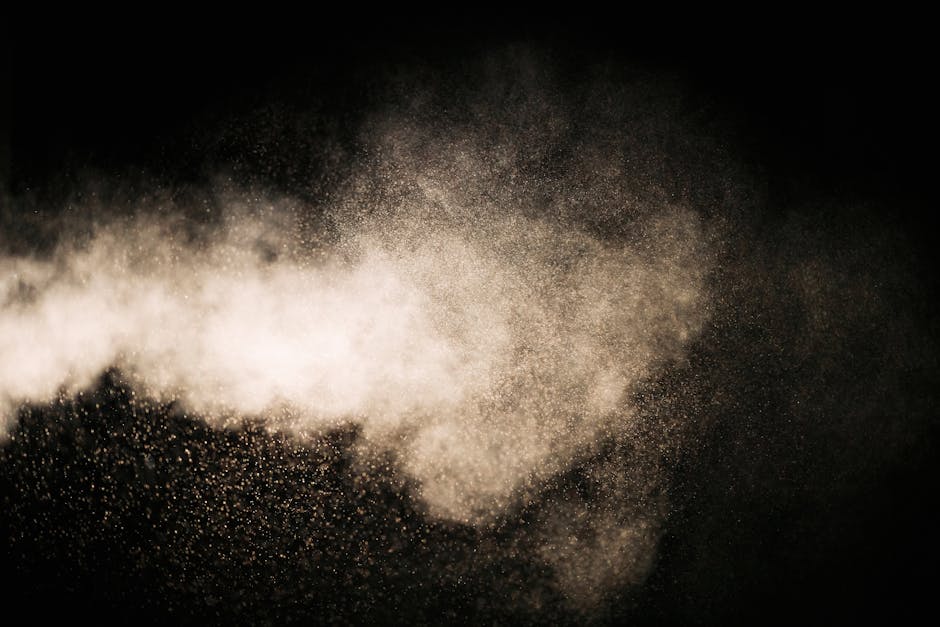
The first wash follows that curve. Water spreads. Pigment follows. Where two paths cross I press the brush harder so the color pools darker. The paper takes the mark before the light shifts again.
Feet on wood, hand on handle
Bare soles feel the grain of the floor. Each ridge under the arch sends a small correction to the wrist. When the wood warms, the pressure eases. When a cool patch appears the stroke tightens. The motes keep moving. I match them.
The dust does not care about composition. It only travels where the air allows.
By the fourth layer the paper has begun to buckle. Tiny valleys catch the next wash exactly where a mote lingered longest. The resulting edge is sharp on one side, feathered on the other. No planning produced it.
Some afternoons the beam is narrow and the motes travel straight. Those sessions yield long vertical stains that later become stems or cracks or the fold of a sleeve. Other days the air stirs and paths tangle. The painting grows dense, almost opaque, until a single clear line cuts through.
After the light leaves
The room cools. The motes settle. I lift the paper and study the back. Where water soaked through, faint halos mark the places the dust spent the most time. These marks never appear in photographs. They only exist when the paper is held against the window at the same angle the light arrived.
Next week the same window will give different paths. The wood floor will have new warm and cool zones. Nothing repeats. The brush learns this quickly and forgets it just as fast.
studio observations on changing light record the same window on different days. The patterns never align twice.
One winter the radiator beneath the sill altered the air currents. Motes rose instead of drifted. The washes that month all carried an upward pull. Edges lifted toward the top of the sheet even when the subject required downward weight. The paintings felt lighter than intended, almost buoyant. The effect lasted until spring.
Texture that survives the fixative
Once the paper dries the surface keeps a memory of every crossing. Run a fingertip across it and the places where motes lingered feel slightly raised. The paint sits higher there. Light catches differently. In low evening light the painting seems to hold its own small dust, though none remains.
notes on surface memory describe similar raised edges appearing in oil when a studio floor vibrates from passing trucks. The principle is the same: external motion enters the work through the body before the brush touches the ground.
I keep one sheet from last year that carries the clearest record. A single mote path runs from lower left to center. The wash followed it exactly. No other marks interfere. When the paper is tilted the line appears to move, though it is fixed. The illusion lasts only as long as the tilt.
recent pigment tests show that certain earth colors hold the raised texture longer than others. The dust path remains visible for months when the pigment is iron-rich.
Tomorrow the light may not arrive until four. The floor may be swept or it may not. The motes will choose their own routes again. The brush will follow or resist. Either choice leaves its own trace once the water is gone.
further notes on transient light track how small changes in room temperature shift the duration of each beam. The paintings accumulate these shifts the way a wall accumulates layers of whitewash.