What They Tell You
The art store will tell you cold press is for texture and hot press is for detail. That's true as far as it goes. Cold press has a rougher surface — the paper was pressed with a cold roller, leaving more tooth. Hot press is smooth, almost slick, pressed with heat. For watercolor, cold press holds more water in its texture. Hot press lets paint move faster, pool differently, dry with harder edges.
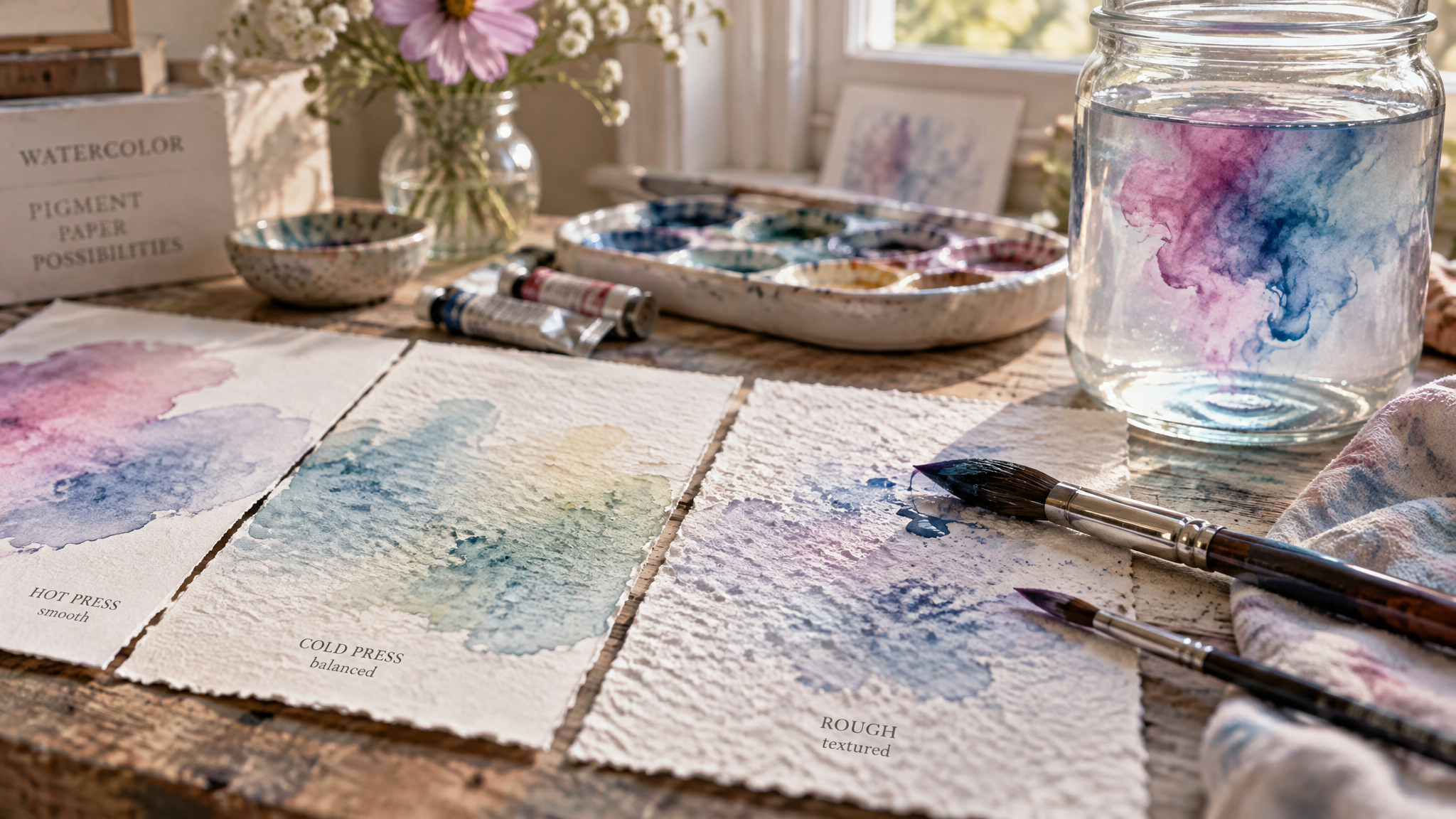
What they won't tell you is how much the paper fights back.
The Texture Argument
Cold press is the default recommendation for beginners, and I understand why. The texture is forgiving. It hides small errors. The paint settles into the grain and looks intentional even when it isn't. There's a warmth to cold press work that comes from the surface itself — the light catches the raised texture and gives the painting a physical presence that hot press can't replicate.
But cold press also resists. When you want a clean wash — a flat, even field of color — the texture works against you. The paint catches on the high points and pools in the low ones. You can work with this, but you have to know it's happening. A lot of beginners don't, and they spend months thinking their technique is wrong when it's actually the paper.
The conversation about materials and process at handcraft and texture gets into this — the way the physical properties of a material shape what's possible, not just what's easy.
The Hot Press Problem
Hot press is harder to use than it looks. The smooth surface means paint moves fast and dries with sharp edges. Wet-on-wet techniques behave differently — the paint spreads further, faster, and the blooms you get are more dramatic. Corrections are harder because the paint doesn't sink into the surface; it sits on top, and lifting it can damage the paper.
I switched to hot press for a series of botanical paintings a few years ago and spent the first two weeks fighting it. The paper felt wrong. My usual approach — loose, layered, building up from light washes — didn't work the same way. The paint dried before I expected it to. The edges were too hard.
Then something shifted. I stopped trying to paint the way I painted on cold press and started painting the way hot press wanted to be painted. Faster. More decisive. Fewer layers, more intention in each one.
What the Art Store Doesn't Say
The art store doesn't tell you that paper choice is a commitment to a way of working. It's not just a surface preference — it's a decision about pace, about control, about what kind of mistakes you're willing to make and which ones you can't afford.
It also doesn't tell you that weight matters as much as surface. A 140lb cold press and a 300lb cold press are different papers. The heavier paper buckles less, holds more water, and gives you more time to work. The lighter paper is cheaper and fine for studies, but it will fight you on anything ambitious.
The creative community has a lot of opinions about paper. Most of them are right for the person holding them. The only way to know what's right for you is to use both, on the same subject, with the same paint, and see what happens.
Buy a small pad of each. Paint the same thing twice. The paper will tell you something about how you work that you didn't know before.
More on materials, technique, and the physical life of painting at Calitoy Muse. And if you're looking for quality art supplies, art supplies worth checking out.